

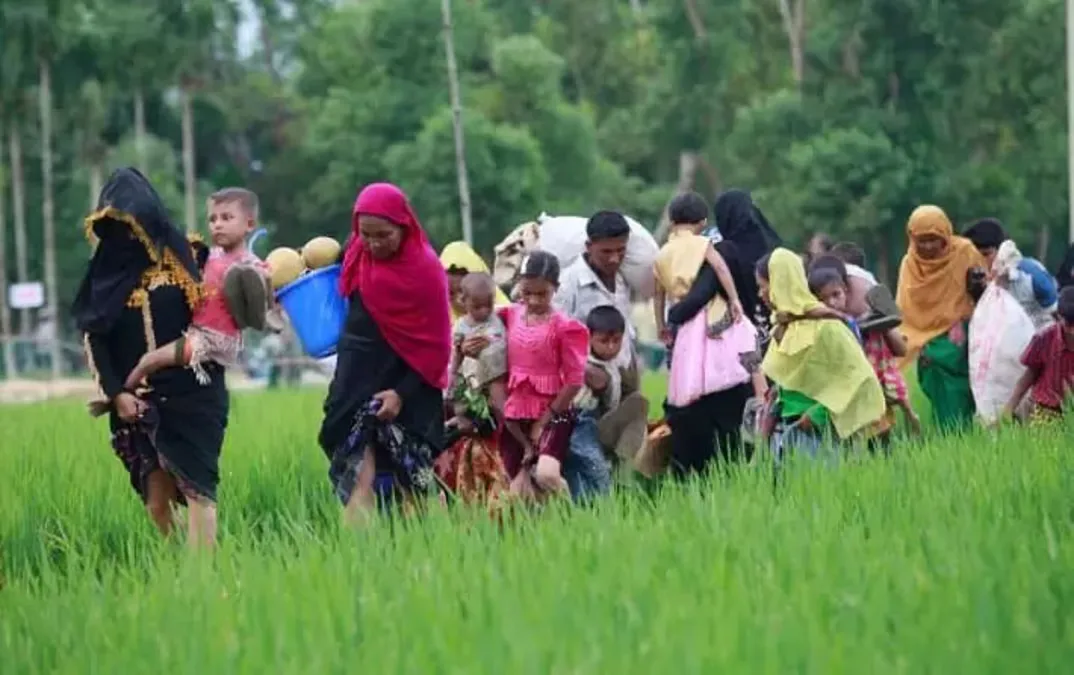
AIZAWL, Dec 24: The number of Myanmar refugees seeking shelter in Mizoram has declined to 32,794 as of December 18, 2024, according to officials from the State’s Disaster Management and Rehabilitation department.
This is a decrease from 33,036 refugees recorded on December 10, 2024. The drop in refugee numbers is largely attributed to the ongoing departures from the refugee camps. Between December 11 and December 18, 380 refugees left Champhai district, located on the Mizoram-Myanmar border, while five refugees left Kolasib district, which borders Assam. On the other hand, there were 143 new arrivals in Serchhip district, situated in central Mizoram.
Among the remaining refugees, 16,892 are residing in 127 relief camps across seven districts of Mizoram, while 15,902 are staying outside the camps. The refugee population consists of 10,002 males, 10,340 females, and 12,452 children. Despite the decrease in numbers, Champhai district continues to be the primary refuge for Myanmar nationals, with 13,586 individuals seeking shelter. Of these, 6,650 are staying in 19 relief camps, while 6,936 are living outside the camps.
Mizoram’s southern districts, including Lawngtlai and Siaha, also house significant numbers of refugees. Lawngtlai district, which shares borders with Myanmar and Bangladesh, accommodates 5,922 refugees, including 2,014 refugees from Bangladesh’s Chittagong Hill Tracts. Siaha district shelters 4,976 Myanmar nationals, with 4,062 in camps and 914 outside.
The influx of refugees began in March 2021 after Myanmar’s military coup on February 1, 2021, which forced many to flee their homes. Although some refugees have returned to their villages, the ongoing conflict between Myanmar’s military and anti-coup resistance forces continues to drive people into Mizoram and neighboring countries like Thailand.
However, officials have reported that many refugees are hopeful about returning soon, as reports indicate that the Chin state, a region predominantly inhabited by Myanmar’s ethnic Chin people, has achieved relative stability, with resistance forces reportedly controlling much of the area.
