

“Rivers do not drink their own water. Trees do not eat their own fruit. The sun does not shine on itself. And flowers do not spread fragrance for themselves. Living for others is a rule of nature.” This quote reminds us that true fulfillment comes not from self-absorption but from serving others and contributing to the world around us. It encourages us to live in harmony with nature’s principles, recognizing that our lives are interconnected and that our actions have a ripple effect.
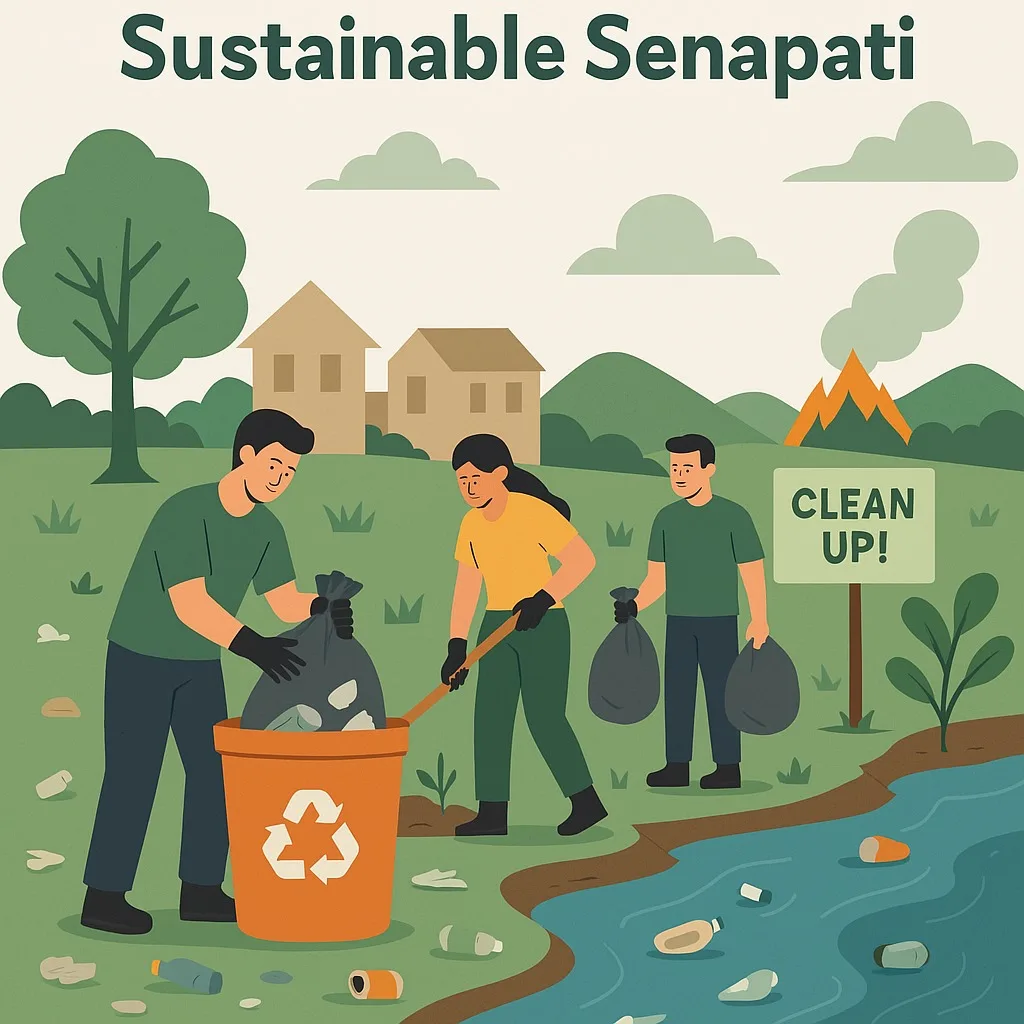
The recent cleanliness drive in Senapati, spearheaded by the District Commissioner on March 23rd, demonstrated the power of collective action in environmental stewardship. The participation of diverse community bodies and students underscored the critical importance of environmental security. This initiative aimed to address the severe pollution of a vital river, a crucial lifeline and habitat for aquatic species. This degradation poses a direct threat to our environment and public health, exacerbated by unrelenting anthropogenic pressures. A comprehensive analysis of the river’s current state and its projected future is imperative.
The river’s pollution stems from multiple sources: direct dumping of domestic waste by upstream residents, littering by picnickers, hikers, cultivators, and fishermen, and the disposal of animal carcasses and offal by butchers. Industrial wastewater discharge further compounds the problem.
Senapati’s environmental challenges extend beyond river pollution. Rapid, unplanned urbanization, inadequate substandard drainage, and improper sewage management are significant concerns. As the district’s administrative, commercial, and educational hub, Senapati experiences a surge in population, leading to increased demand for housing and infrastructure, and consequently, greater waste generation. A focus on profit maximization has eroded environmental consciousness and socio-cultural values. Meanwhile, weak regulatory frameworks for infrastructure, waste management, and enforcement, coupled with resident apathy and non-compliance, exacerbate these issues.
Another dire issue that need to be urgently addressed is the rampant forest fire during the dry season either by hunters, cattle rearers, or any random person having possession of matches/lighters. Inorder to prevent or mitigate them, a top-down approach is required to make the rules more uniform and fruitful. Time to time surveillance using technology like drone would deter people from such action. Schemes/food distribution at subsidized price may be withheld for any village/villages that failed to comply or implement environmental control laws can be a good move. At the same time educating the general public about the ecological disruption caused by fire is required. The extreme weather events such as heatwave, cloudburst, flash flood and other weather-related events should serve as a reminder that climate change due to human activities is a real phenomenon.
Though there has been no formal survey, reports, statistics and data to measure the depth of harm, it is conspicuous that the sensitive local ecology is severely disturbed and is strained near beyond its carrying capacity. The district/town’s over-saturation and the gradual erosion of cultural values are evident. While we often criticize pollution in metropolitan cities, our own practices, in a smaller context, contribute significantly to the problem. The misconception that smaller towns and rural areas are immune to significant environmental degradation must be dispelled.
A Unified Approach is Essential
Addressing these interconnected challenges requires an integrated, holistic approach. Fragmented efforts, such as inconsistent regulations between upstream and downstream areas or isolated cleanup drives, will yield limited results. (For example, cleaning up in senapati area alone would be futile if Karong area residents remain dormant) Sustainable environmental protection necessitates the active participation and cooperation of all stakeholders. We must cultivate a culture of ecological responsibility, embedding sustainable practices into our daily routines.
Initial cleanup efforts can be amplified through targeted awareness campaigns, sensitization programs, media outreach community workshops, and prominent signage along the riverbanks. Local reporters, independent journalists, vloggers, youtubers etc, can play a significant role in exposing, educating, and disseminating information. The recent enthusiastic response of students and volunteers to the DC’s call reflects a growing awareness of environmental degradation and climate change impacts. It is crucial to capitalize on this momentum. To encourage the people further into active participation, local DC or the apex district CSO can give annual award to the cleanest village/colony. Further, the district municipality should incorporate better waste management infrastructure and ensure regular availability of waste collector vehicle connected to the last mile. Frequent monitoring and initiating disciplinary actions against those defaulters is recommended.
Environmental responsibility is a shared endeavor. Without a coordinated, comprehensive strategy, the river will remain a degraded resource, failing to fulfill its vital ecological role. This cannot be a seasonal exercise. It requires sustained engagement, mobilisation, and action. Reversing the damage will be near impossible.Time to act is never better than now. Let us make every effort u to make Senapati the model district of Manipur.
(Views expressed are personal)
Joyson Kh
State President NSUI
Media Panelist MPCC
joysonofkhoho@gmail.com
