
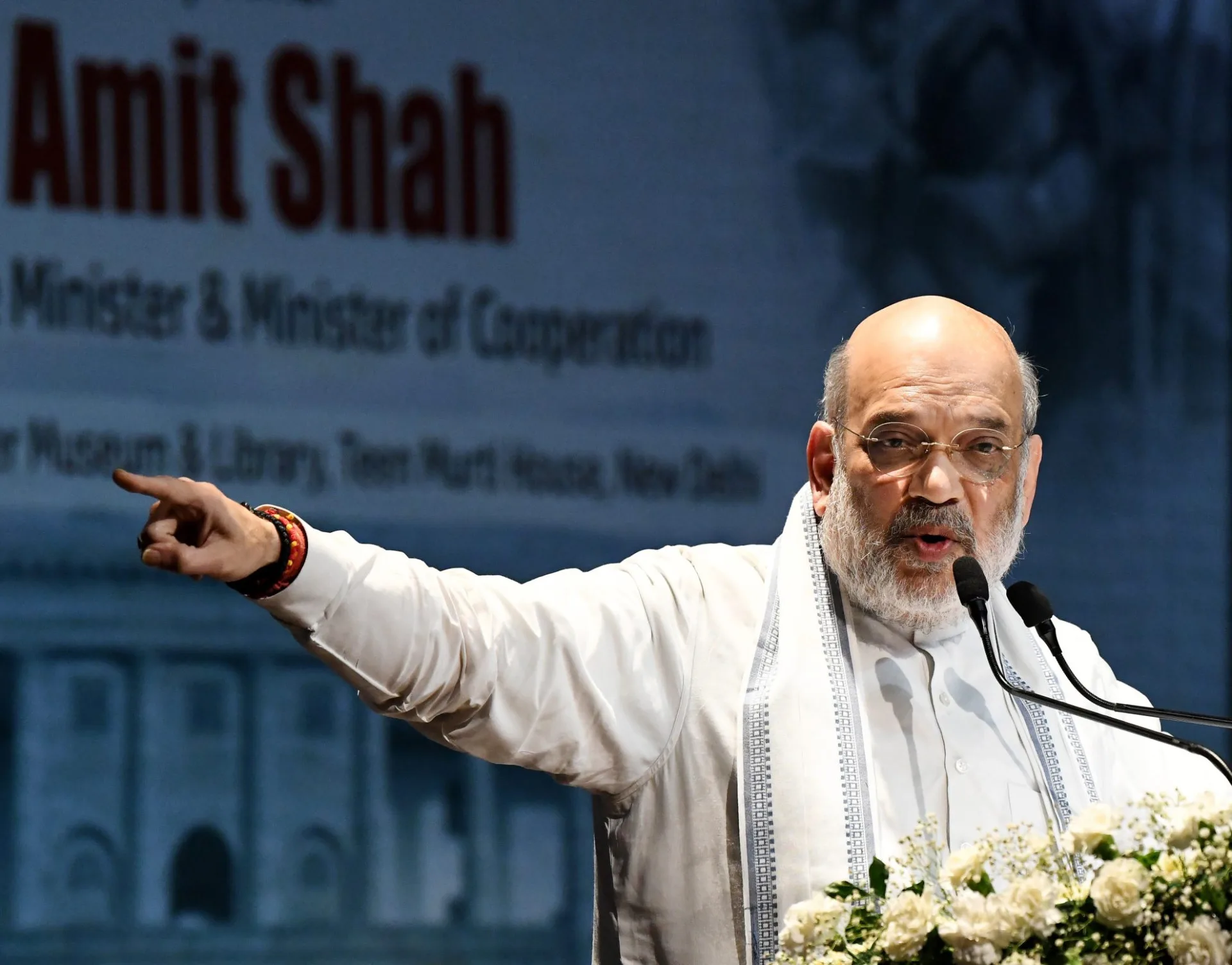
NEW DELHI, June 26: Union Home Minister Amit Shah on Thursday described drugs as the biggest scourge affecting the country’s youth and reaffirmed the government’s commitment to dismantling narcotics networks and restoring the lives of those affected. His remarks came on the occasion of the International Day Against Drug Abuse and Illicit Trafficking, observed annually on June 26 to reinforce global cooperation in the fight against drug abuse and illicit trade.
In a message shared on X, Shah said the Modi government is adopting a whole-of-government approach to strike narco-cartels ruthlessly while also extending empathy and support to help addicted individuals reintegrate into society. He also praised the ongoing efforts of those involved in the national campaign against drugs, stating, “I salute all warriors and allies in our battle for a drug-free Bharat.”
As part of its June campaign under the Nasha Mukt Bharat Abhiyan, the Ministry of Social Justice and Empowerment has reached out to more than 15.78 crore people across the country, including over 5.26 crore youth and 3.31 crore women, through awareness and outreach programmes. The Ministry is particularly focused on engaging students and youth to curb the rising threat of substance abuse in vulnerable communities.
Coinciding with this national push, the World Drug Report 2025 presented a concerning global outlook, estimating that 316 million people worldwide used drugs other than alcohol and tobacco in 2023 — about six percent of the population aged 15 to 64. Cannabis remains the most used substance globally, with 244 million users, followed by opioids, amphetamines, cocaine, and ecstasy. The report cautioned that organized drug trafficking groups are increasingly exploiting global crises, conflicts, and displaced populations, creating new and more complex challenges.
India has strengthened its response through a combination of legal enforcement and social outreach. The Narcotic Drugs and Psychotropic Substances (NDPS) Act of 1985 bans non-medical use of drugs while offering immunity to those who seek treatment voluntarily. The NDPS (Illicit Traffic) Act of 1988 allows preventive detention of repeat drug offenders, and the Drugs and Cosmetics Act of 1940 regulates pharmaceutical drug production and distribution in the country.
With a robust legal framework and widespread public engagement, the government aims to create a drug-free Bharat by intensifying its campaign and dismantling drug trafficking networks while promoting rehabilitation and community-based recovery solutions.
