

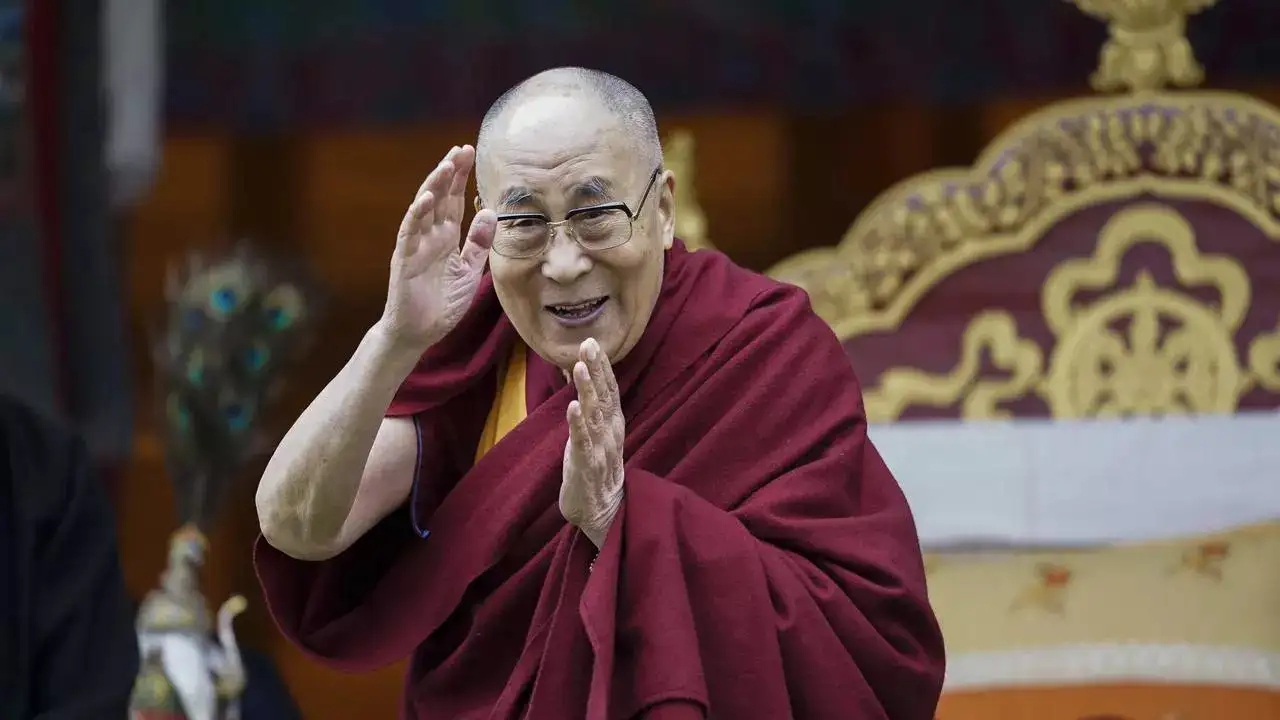
NEW DELHI, July 4: China on Friday issued a strong diplomatic warning to India after Union Minority Affairs Minister Kiren Rijiju stated that the reincarnation of the Dalai Lama should be decided by the Tibetan spiritual leader himself. Beijing called the comment a violation of its sovereignty and urged India to act cautiously on Tibet-related matters, warning that such remarks could damage the fragile efforts to normalise bilateral relations.
Chinese Foreign Ministry spokesperson Mao Ning, responding to a query at a regular press briefing, said, “India must recognise the anti-China separatist nature of the 14th Dalai Lama and uphold its commitments on Xizang-related issues.” (China refers to Tibet as “Xizang”.)
Mao further cautioned India to “be cautious in its words and actions, and refrain from interfering in China’s internal affairs to avoid damaging the prospects for improved China-India relations.” The warning comes amid sensitive efforts by both nations to thaw relations after the prolonged Eastern Ladakh border standoff that began in 2020.
Rijiju’s remarks were made on Thursday ahead of the 90th birthday celebrations of the Dalai Lama in Dharamshala, where he and fellow Union Minister Rajiv Ranjan Singh are representing the Indian government. The minister, who is himself a practising Buddhist from Arunachal Pradesh, stated that the process of identifying the next Dalai Lama lies solely with the Tibetan spiritual leadership and not with any external government.
“The decision regarding the Dalai Lama’s reincarnation must rest with Tibetan Buddhist institutions and His Holiness himself,” Rijiju said, adding that the birthday celebration was a religious function, “not a political one.”
The comment followed recent statements by the Dalai Lama asserting that the institution would continue and that only the Gaden Phodrang Trust—established by his office in 2015—would have the authority to identify his successor. China, however, has rejected this claim and insisted that the reincarnation process must follow what it calls “rigorous religious rituals, historical conventions, and the approval of the central government.”
Mao emphasized that the current 14th Dalai Lama had undergone a similar approval process and that the same protocol, including the use of the Qing Dynasty-era “golden urn” and Chinese laws, must be followed in future.
The latest exchange highlights renewed tensions between the two neighbours even as efforts to normalise ties have recently shown modest progress. Prime Minister Narendra Modi and President Xi Jinping met last year on the sidelines of the BRICS Summit in Kazan, leading to a series of diplomatic engagements.
The resumption of the Kailash Mansarovar Yatra for Indian pilgrims—paused during the border standoff—has been cited as an initial step towards confidence-building.
However, Beijing’s sharp reaction to Rijiju’s remarks underscores the continued sensitivity surrounding the Tibetan issue and the role of the Dalai Lama, whom China considers a separatist. New Delhi, while officially recognising Tibet as part of China, has maintained a nuanced stance that respects the religious rights of Tibetans in exile.
