

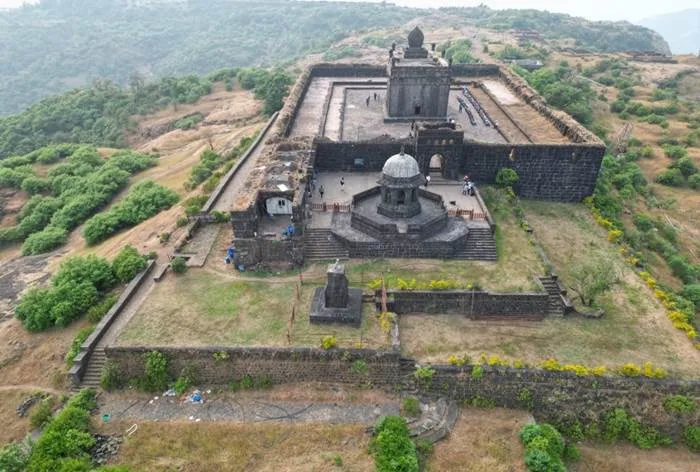
NEW DELHI, July 12: In a landmark recognition of India’s rich cultural heritage, the “Maratha Military Landscapes of India” have been officially inscribed on the UNESCO World Heritage List during the 47th session of the World Heritage Committee held in Paris, France. This inscription marks India’s 44th entry on the prestigious list and celebrates the military ingenuity and architectural excellence of the Maratha Empire.
The nomination, part of the 2024–25 cycle, comprises twelve strategically positioned forts spread across Maharashtra and Tamil Nadu. These forts exemplify the Maratha Empire’s tactical military strategies and their seamless integration with diverse geographic terrains from the 17th to 19th centuries CE.
The twelve forts include: Salher, Shivneri, Lohgad, Khanderi, Raigad, Rajgad, Pratapgad, Suvarnadurg, Panhala, Vijaydurg, Sindhudurg (all in Maharashtra), and Gingee Fort in Tamil Nadu. These sites reflect a wide range of military architectural styles adapted to varied terrains, including hilltops, forested slopes, coastal islands, and plateaued highlands. Shivneri, Raigad, and Gingee represent hill forts, while Suvarnadurg and Sindhudurg stand as island forts guarding the Arabian Sea.
The nomination was evaluated over 18 months and included a site visit and thorough assessments by ICOMOS (International Council on Monuments and Sites). It was inscribed under UNESCO criteria (iv) and (vi), recognizing their technological sophistication and enduring association with historic events and cultural traditions.
Eight of these forts are currently protected by the Archaeological Survey of India (ASI), while the remaining four fall under the Directorate of Archaeology and Museums, Government of Maharashtra.
Prime Minister Narendra Modi, Union Culture Minister Gajendra Singh Shekhawat, and Maharashtra Chief Minister Devendra Fadnavis welcomed the recognition and congratulated the nation, describing it as a proud moment for India and a tribute to the Maratha legacy.
“This inscription reflects the vision, resilience, and heritage of our ancestors, and further positions India as a global custodian of civilizational history,” said PM Modi.
The committee’s deliberations lasted nearly an hour, with 18 out of 20 State Parties voicing strong support for India’s nomination. The proposal received enthusiastic backing from the UNESCO World Heritage Centre, ICOMOS, IUCN, and several member states.
This international accolade follows the 2023 inscription of the Moidams of Charaideo (Assam) and cements India’s position as the country with the sixth-highest number of World Heritage Sites globally, and second in the Asia-Pacific region. India is currently serving as a member of the UNESCO World Heritage Committee (2021–2025).
