

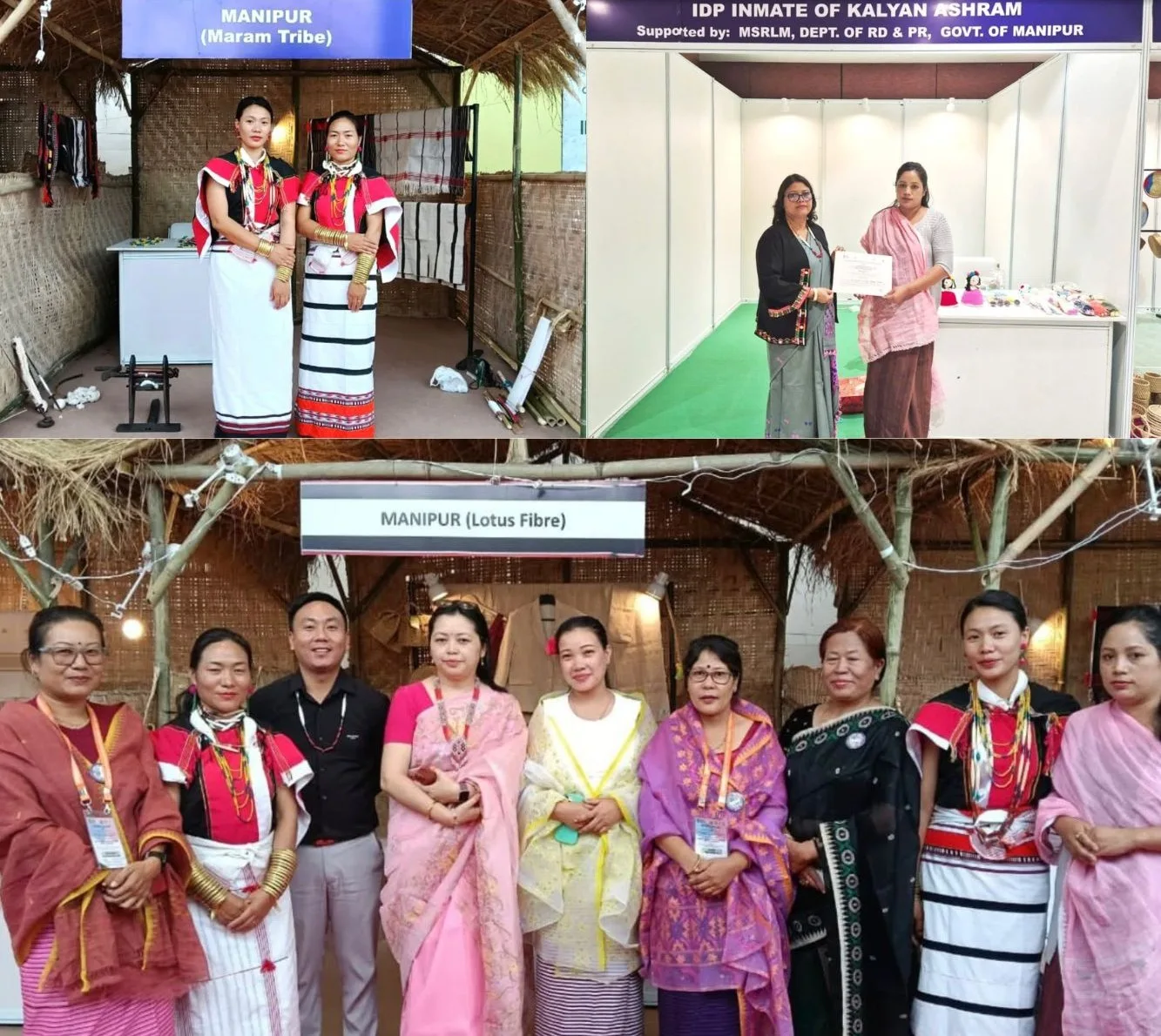
New Delhi, October 9: Two Self-Help Groups (SHGs) under the Manipur State Rural Livelihoods Mission (MSRLM), along with Smt. Angom Sarjubala Devi, an Internally Displaced Person (IDP) from the Kalyan Ashram relief camp in Kakching, represented Manipur at the National Conclave on Natural Fibres and Sustainable Textiles, held in the national capital from October 6 to 8, 2025.
The SHGs captivated audiences by presenting live demonstrations of traditional attire-making and showcasing intricate crochet crafts, reflecting the rich cultural heritage and artisanal skill of Manipur’s rural communities.
Organised by the the College of Community Science, Tura, Meghalaya, under Central Agricultural University (CAU), Imphal, in collaboration with the Ministry of Textiles, Government of India, ICAR, New Delhi, Development Research Institute (DRI), New Delhi, and the Government of Meghalaya, the three-day conclave on “Weaving India Together: Natural Fibres, Innovation and Livelihoods from the North East and Beyond”—concluded with a strong call to integrate traditional fibre crafts with innovation, entrepreneurship, and market development.
The event drew over 300 participants from 31 institutions across 19 states, including farmers, artisans, researchers, and policymakers, all united in promoting natural fibres as sustainable alternatives to synthetic textiles and supporting rural livelihoods tied to the sector.
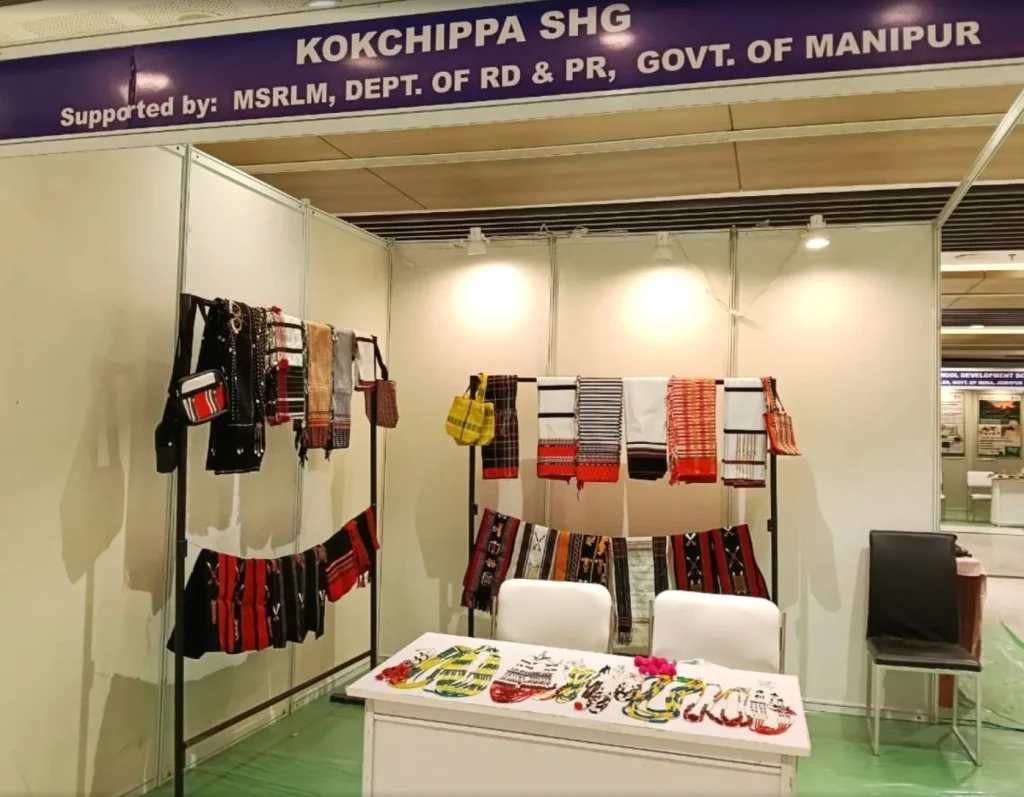
A major highlight of the conclave was the Artisan Showcase Pavilion, featuring 29 artisans from the seven North Eastern states and other regions including Odisha, Rajasthan, West Bengal, and Gujarat. The pavilion recorded sales exceeding ₹6 lakh in just two days, reflecting strong market interest and design collaboration opportunities.
During a special interaction session, Union Agriculture Minister Shivraj Singh Chouhan lauded the contribution of India’s artisans and farmers, stating, “Our farmers and weavers are the custodians of India’s sustainable textile heritage. We are committed to supporting them through value addition and better market linkages.”
Adding a modern flair to the event, a student-led fashion show presented garments made from nine natural fibres—including lotus, banana, pineapple, cotton, and eri silk—alongside traditional attire representing 14 ethnic communities of the North East. Several designs were identified by industry experts as having strong potential in the sustainable fashion market.
The conclave featured three technical sessions, five panel discussions, and 74 research presentations exploring themes such as heritage-based modernity, sustainability in the farm-family ecosystem, and innovations driving the natural fibre industry.
