
GUWAHATI, Nov 13: Director General of the Narcotics Control Bureau (NCB), Anurag Garg, has described drug trafficking and abuse as one of India’s major emerging security challenges, warning that proceeds from the illegal drug trade are increasingly being diverted to organized crimes such as terrorism financing, arms smuggling, and money laundering.
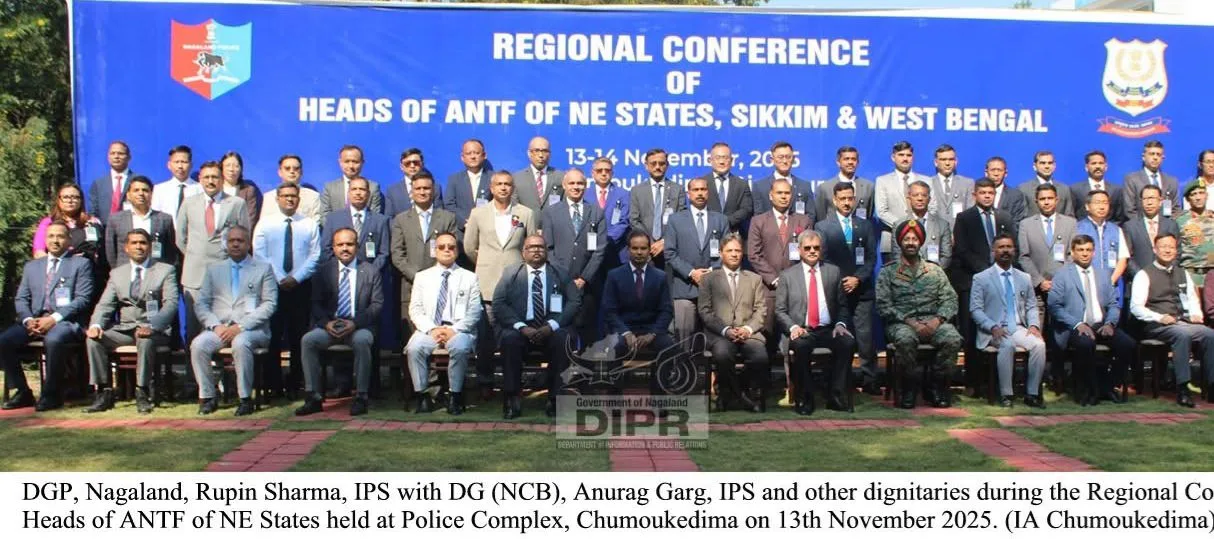
Speaking at the Regional Anti-Narcotics Task Force (ANTF) Conference for Northeastern States, including Sikkim and West Bengal, held in Dimapur, Nagaland, Garg underscored the urgent need for “excellent coordination and collaboration” among enforcement, intelligence, and security agencies to effectively tackle the narcotics menace.
He noted that the easy availability of drugs in the Northeast is fueling addiction, social instability, and domestic violence, and placing a heavy burden on public health systems. “The youth, who should be the driving force of the economy, become a burden,” Garg said, citing a 2019 Ministry of Social Justice and Empowerment survey which found that drug consumption rates in several northeastern states are far higher than the national average.
The NCB chief highlighted that ANTFs have now been established in all states and union territories, functioning as the first line of defence against narcotics at the state level. He stressed that the Northeast requires special attention due to its proximity to the Golden Triangle and the porous India-Myanmar border, which has facilitated the inflow of heroin and methamphetamine into India.
“After the Taliban takeover in Afghanistan, Myanmar has become the world’s largest producer of heroin and methamphetamine,” Garg noted, explaining that these operations are run by organized crime groups, ethnic militias, and insurgent outfits engaged in arms trade and money laundering.
He also thanked the Nagaland Police and the state government for co-hosting the regional meet, which aims to formulate a roadmap for an integrated regional response to the drug problem. The conference’s key agenda includes targeting major drug syndicates, tracing financial networks, destroying illicit poppy cultivation, and enhancing real-time intelligence sharing among agencies.
Garg further called for the increased use of technological tools such as NATGRID, NIDAAN, and other databases to strengthen intelligence collection, while urging the effective use of Joint Coordination Committees (JCC) and NCORD mechanisms at the state and district levels.
Expressing optimism about the outcome of the conference, Garg stated, “This conference will help us strengthen inter-agency trust, identify forward and backward linkages, and build a unified strategy to realise the vision of a Drug-Free India by 2047.”
The two-day conference includes technical sessions focusing on topics such as cross-border trafficking challenges with Bangladesh and Myanmar, identification and destruction of illicit crops, and drug trafficking trends in the Northeast.
