
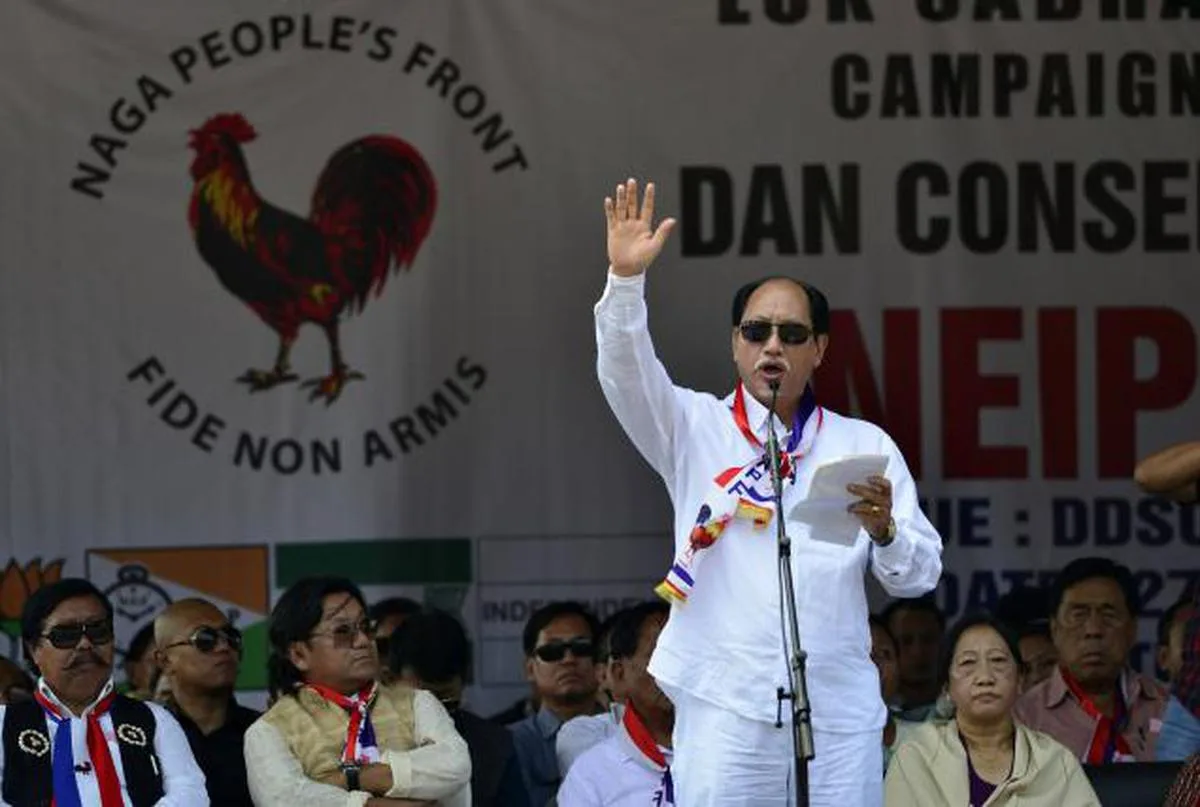
KOHIMA, Nov 28: Nagaland Chief Minister Neiphiu Rio on Thursday described the merger of the Nationalist Democratic Progressive Party (NDPP) and the Naga People’s Front (NPF) as a “historic coming together” aimed at strengthening unity and safeguarding the identity of the Naga people. Speaking at the Central Executive Council (CEC) meeting of the NPF in Kohima, Rio—who took over as party president following the formal merger on October 21—stressed that the success of the unified regional platform would rely on collective sincerity and cooperation among party members.
Rio expressed gratitude to party leaders for their support and emphasised that the objective of the merger is to preserve Naga history, culture, tradition and identity. Pointing out the scarcity of written Naga historical records, he said the political unification would serve as a valuable reference for future generations. He also recognised the NPF as the oldest regional party in Naga politics and urged members to document the contributions of past and present leaders, including those now aligned with other parties.
On organisational restructuring, Rio acknowledged that some decisions may not satisfy everyone but called for patience and cooperation. He said the secretary general was under pressure due to lobbying but assured members that all issues would be addressed gradually. Highlighting the party’s regional character, Rio mentioned the NPF’s presence in Nagaland, Manipur and Arunachal Pradesh, along with aspirations to expand into Assam, while maintaining solidarity with Naga communities living across international borders.
The CEC adopted resolutions stating that the merger strengthens shared Naga values and promotes a unified regional vision. The party also extended an invitation to like-minded regional groups to join the platform and appealed for continued public support.
Formalised on October 21—coinciding with the NPF’s 63rd foundation day—the merger brings together NDPP’s 32 MLAs and NPF’s 2 MLAs, forming a stronger consolidated regional force. The CEC reaffirmed its support for the ongoing peace talks and the pursuit of an “honourable, acceptable and inclusive” solution to the Naga political issue. It also endorsed the Nagaland Cabinet’s January 6 resolution seeking the withdrawal of the re-imposed Protected Area Permit (PAP) and urged the Centre to take appropriate action in the interest of the state.
Additionally, the CEC approved a series of organisational reforms, including the creation of new party divisions for Meluri, Chümoukedima and Shamator. It sanctioned amendments to the party constitution, formed a Constitution Amendment Committee, and authorised the party president to establish a Central Finance Committee.
