

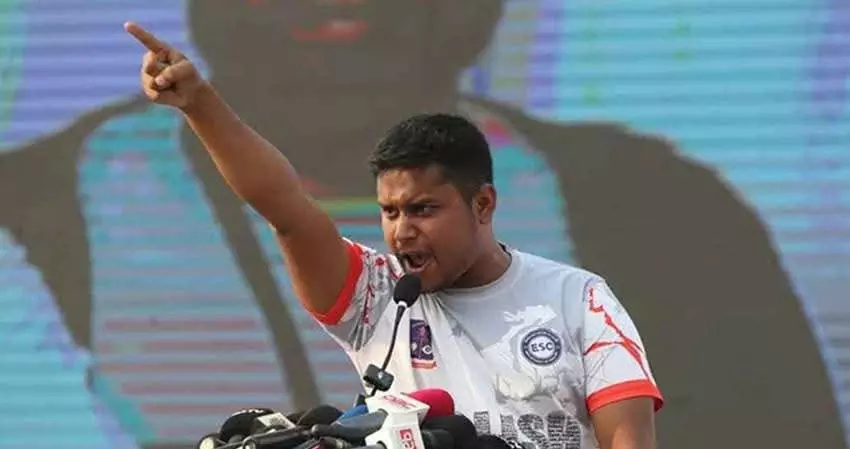
DHAKA, Dec 16: Bangladesh’s National Citizen Party (NCP) leader Hasnat Abdullah on Monday warned India against any attempt to destabilise Bangladesh, claiming such actions could have serious regional consequences, including the isolation of India’s northeastern states.
Addressing an all-party protest rally organised by Inqilab Mancha at Dhaka’s Central Shaheed Minar, Abdullah accused New Delhi of backing elements he described as “chaos-creators” and of interfering in Bangladesh’s internal political processes, particularly its electoral system. He alleged that India was supporting forces attempting to derail democracy in Bangladesh.
In a provocative remark that drew applause from sections of the audience, Abdullah claimed that Bangladesh could respond by sheltering separatist and anti-India forces and “sever the Seven Sisters from India.” He also linked India to a recent attack on right-wing activist Osman Hadi and accused New Delhi of involvement in cross-border killings of Bangladeshi nationals.
Warning that Bangladesh’s sovereignty must not be undermined, Abdullah said any such actions would invite repercussions not just bilaterally but across the wider region. Known for his sharp anti-India stance, the NCP leader further accused India of harbouring political “terrorists” from the formerly ruling and now-banned Awami League.
Calling for a future Bangladeshi Parliament that would be firmly “pro-Bangladesh” and opposed to what he termed “Indian hegemony”, Abdullah said Dhaka must engage with New Delhi as an equal partner rather than a subordinate. He also struck a sensitive historical note by downplaying India’s role in the 1971 Liberation War, asserting that the victory belonged solely to Bangladesh.
He criticised India’s observance of Vijay Diwas, despite it commemorating Indian soldiers who fought alongside Bangladeshi forces during the 1971 war that led to the surrender of over 93,000 Pakistani troops and the birth of Bangladesh.
A prominent face of the 2024 July Uprising, Abdullah has previously targeted India and Prime Minister Narendra Modi, including remarks made last year ahead of Vijay Diwas, which he described as a threat to Bangladesh’s independence. His latest comments come a day before Vijay Diwas on December 16, reigniting debate over historical narratives and present-day India–Bangladesh relations.
