

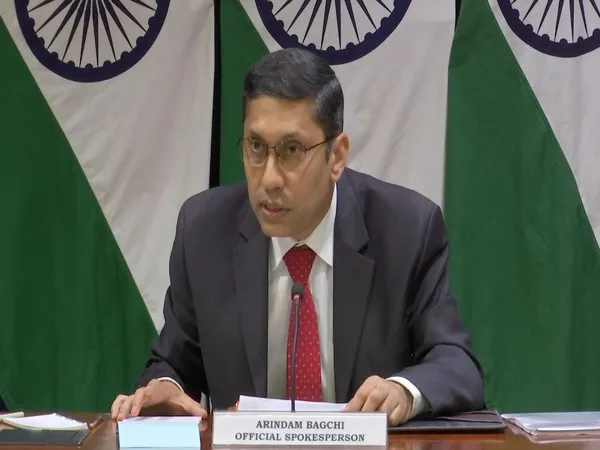
GENEVA, March 4: India has vehemently rejected the “unfounded and baseless” remarks made by United Nations High Commissioner for Human Rights, Volker Turk, regarding the situation in Jammu and Kashmir (J&K) and Manipur. During the 58th regular session of the Human Rights Council in Geneva, India’s Permanent Representative to the United Nations, Ambassador Arindam Bagchi, sharply criticized the comments, calling them “cherry-picking” of situations and a stark contrast to the ground realities in India.
“As India was mentioned by name, let me begin by emphasizing that the world’s largest democracy continues to be a healthy, vibrant, and pluralistic society. Unfounded and baseless comments in the update contrast jarringly with ground realities. The people of India have repeatedly proven wrong such misplaced concerns about us,” said Bagchi, addressing the Human Rights Council in Geneva. His statement was in direct response to the remarks made by the UN Human Rights chief, which mentioned violence and human rights concerns in both Kashmir and Manipur.
One of the key points of contention was the High Commissioner’s reference to Jammu and Kashmir, which Bagchi described as being erroneously referred to as “Kashmir” in the report. Bagchi pointed out that this misrepresentation came at a time when the region had seen remarkable improvements, including increased peace, record voter turnout in provincial elections, a booming tourism industry, and rapid infrastructure development. “This is ironic in a year that stood out for the region’s improving security, record voter turnout in provincial elections, booming tourism, and rapid infrastructure growth,” Bagchi said.
Turk had also called for “stepped-up efforts” to address violence and displacement in Manipur, urging the international community to prioritize dialogue, peacebuilding, and human rights. Additionally, he expressed concerns about the use of restrictive laws and the harassment of human rights defenders and independent journalists, suggesting these factors had led to “arbitrary detention and a diminished civic space” in regions like Kashmir. Bagchi swiftly dismissed these concerns, stating that the people of India had repeatedly proven such concerns to be misplaced.
In his critique, Bagchi also addressed the broader approach of the global update, criticizing the “oversimplification of complex issues, sweeping and generalized remarks, the usage of loose terminologies, and apparent cherry-picking of situations.” He called for better understanding of India’s democratic and pluralistic ethos, which he emphasized continues to define the country’s vibrant civic space.
He also pointed out that while the High Commissioner’s report covered a wide range of global human rights issues, including those in Ukraine, Gaza, Afghanistan, and the United States, it notably made no mention of Pakistan. This omission further underscored India’s dissatisfaction with the UN Human Rights Office’s handling of regional issues.
Bagchi concluded by calling for introspection within the office of the High Commissioner, urging the UN to reconsider the manner in which it addresses complex international issues. “The High Commissioner has sensed a pervasive unease, but we would submit that a key element to addressing this is a long and hard look in the mirror by the office of the High Commissioner,” Bagchi stated.
