

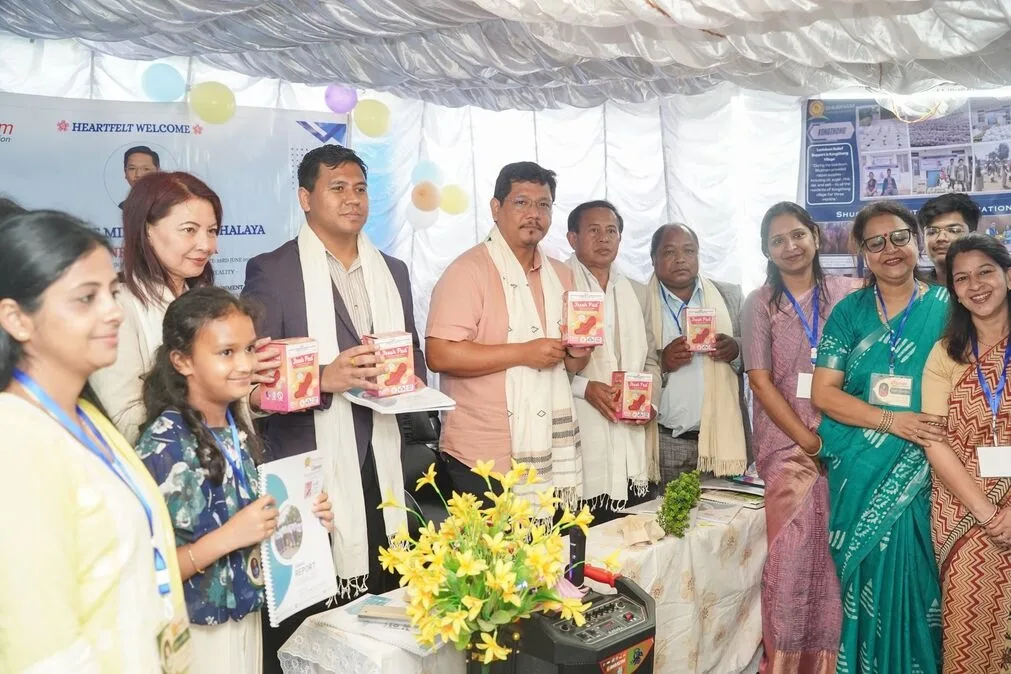
SHILLONG, June 24: In a landmark step toward menstrual hygiene, women’s empowerment, and environmental sustainability, the Meghalaya government on Monday inaugurated the region’s first production unit for reusable sanitary pads under the “She-Rise” initiative—a Zero Waste Period Mission.
The unit, located in Laitkroh, East Khasi Hills District, is a pioneering project by the Shubham Charitable Association under the Green Meghalaya Mission. It is the first of its kind in the North East and aims to provide eco-friendly, affordable, and safe menstrual hygiene products to women while generating employment opportunities.
“She-Rise is not just a production unit; it is a movement that promotes menstrual hygiene, protects our environment, and empowers women,” said Chief Minister Conrad K. Sangma at the inauguration. “By offering safe, affordable, and eco-friendly alternatives, we are addressing a vital public health issue while building resilient communities.”
The project was supported with ₹5 lakh from the Chief Minister’s Special Grant (CMSG), enabling the purchase of essential machinery and equipment. The unit has already provided jobs to over 25 women from the region, significantly contributing to economic empowerment at the grassroots level.
Commending the efforts of the Shubham Charitable Association, the Chief Minister announced plans to scale up the initiative across the state. “We are committed to expanding this initiative statewide and encouraging more women-led organizations to join the cause. This not only creates jobs but also helps normalize conversations around menstrual hygiene and ensures that no girl is held back due to lack of access to basic sanitary care,” he stated.
As part of the broader mission, the government plans to install sanitary pad vending machines in schools and introduce reusable sanitary products in collaboration with the Education and Social Welfare departments.
“Menstrual hygiene is a fundamental health right,” said Puspa Bajaj, founder of the Shubham Charitable Association. “We are working to break taboos, promote eco-conscious choices, and support women’s dignity with sustainable solutions.”
Bajaj also shared that the association is exploring sustainable local materials like bamboo and banana fibre to further enhance the eco-friendly impact of the initiative.
