

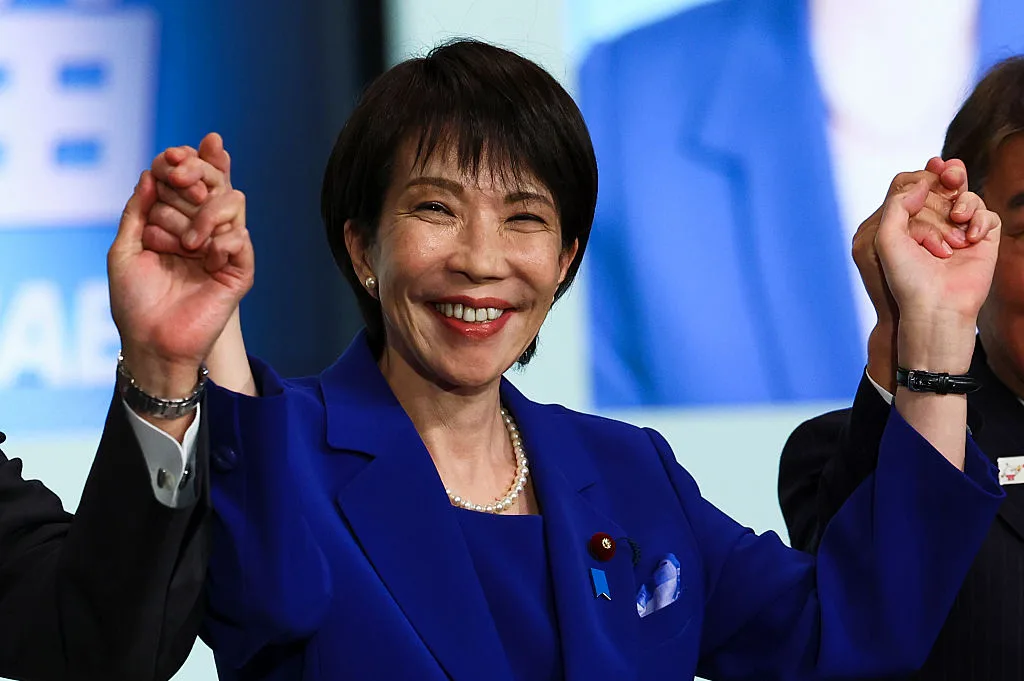
Tokyo, October 21: In a historic political milestone, Sanae Takaichi was elected as Japan’s first female prime minister on Tuesday, breaking a long-standing gender barrier and setting the stage for a more conservative turn in Japanese politics.
A close ally of former Prime Minister Shinzo Abe and a self-professed admirer of Britain’s Margaret Thatcher, Takaichi secured 237 votes in the lower house election, surpassing the majority threshold in the 465-seat chamber. Her victory marks a defining moment for a country where male leaders have dominated since World War II.
The 63-year-old conservative leader rose to power after the ruling Liberal Democratic Party (LDP) struck a coalition deal with the right-wing Japan Innovation Party (Ishin) on Monday, ensuring parliamentary support for her leadership. She was subsequently approved by the upper house and sworn in as Japan’s 104th prime minister, succeeding Shigeru Ishiba, who resigned last month following the LDP’s electoral setbacks.
Takaichi’s ascent is expected to bring continuity with Abe’s policies, including pro-growth economic measures and increased government spending aimed at revitalizing Japan’s fragile economy. The so-called “Takaichi trade” has already buoyed investor sentiment, sending the Nikkei index to record highs. However, economists have warned that expanded fiscal stimulus could exacerbate inflation and weaken the yen in a country burdened by massive public debt.
“Any revival of Abenomics under Takaichi could prove difficult in today’s inflationary environment,” said Tadashi Mori, a professor of politics at Aichi Gakuin University. “Stimulus and tax cuts might boost short-term demand but risk undermining currency stability.”
Beyond economics, Takaichi is expected to pursue tougher stances on national security, immigration, and social policy, reflecting her reputation as one of Japan’s most hardline conservatives. Political analysts suggest she will need to build broader alliances across party lines to secure stable governance, as her coalition does not command a majority in either house of parliament.
Her election, however, carries enormous symbolic weight in a society still grappling with gender inequality. For many Japanese women, Takaichi’s rise represents both a breakthrough and a challenge — a moment that could reshape perceptions of leadership in one of the world’s most male-dominated political landscapes.
