

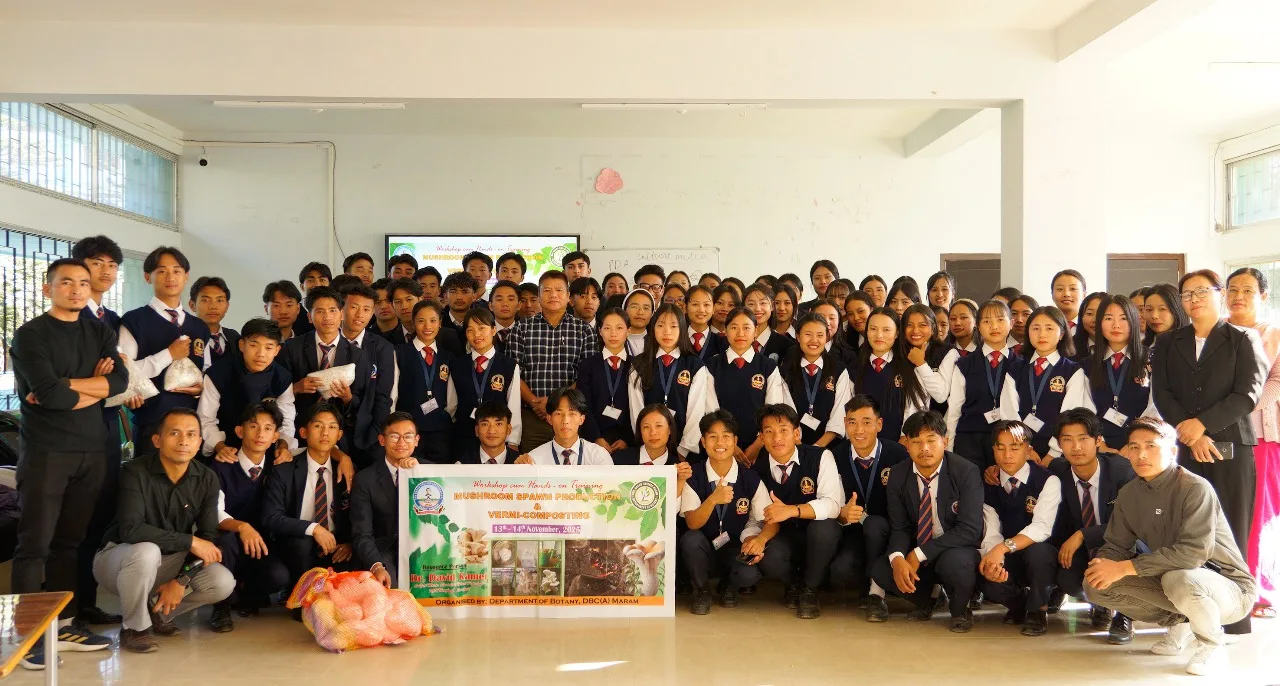
MARAM, Nov 15: The Department of Botany, Don Bosco College (Autonomous), Maram, conducted a Two-day Workshop cum Hands-on Training on “Mushroom Spawn Production and Vermi-Composting” on 13th-14th November, 2025 in the college campus. The programme aimed to equip students with practical knowledge and technical competencies in sustainable organic practices, with a special focus on mushroom cultivation and the scientific management of organic waste through vermi-composting.
The inaugural session opened with a welcome address by Sir Chariakpou Denis Gangmei, Head of the Department, who highlighted the relevance of self-reliant green initiatives and emphasized their growing importance in today’s environmental and economic context.
Rev. Fr. (Dr) K O Sebastian, the Principal of Don Bosco College (A), Maram, encouraged the participants regarding the nutritional advantages of mushrooms and the necessity for their ongoing production as an integral part of the curriculum. He urged the attendees to utilize the knowledge acquired to create eco-friendly and income-generating initiatives.
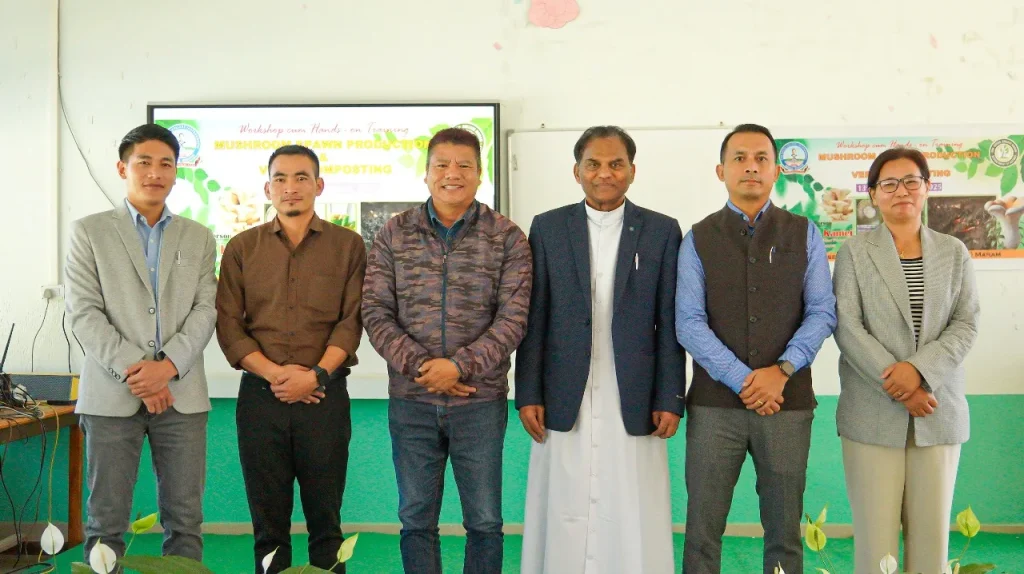
Dr. David Kamei served as the resource person for the workshop; he is a Subject Matter Specialist in Plant Protection, KVK Hengbung, Senapati, Manipur. He provided valuable sessions covering both the scientific principles and practical elements of mushroom spawn production, cultivation techniques, and vermi-composting. Attendees were familiarized with the fundamental biology of mushrooms, the preparation of pure cultures, the selection of spawn substrates, as well as the processes of sterilization, inoculation, and incubation.
During the hands-on session, students engaged actively in the preparation of mushroom beds, the inoculation of spawn, and the establishment of vermi-compost units utilizing organic waste and the Eisenia fetida (red earthworm) species. The resource person provided guidance to the students throughout the entire process, highlighting the importance of hygiene, environmental conditions, and maintenance techniques to achieve optimal yield.
The workshop served as an excellent platform for students to acquire practical experience in both mushroom cultivation and composting methods, thereby enhancing their understanding of applied botany and the entrepreneurial potential in sustainable agriculture.
Overall, the workshop cum hands-on training proved to be a successful and enriching learning educational experience, inspiring students towards sustainable practices and innovative uses of biological resources.
