
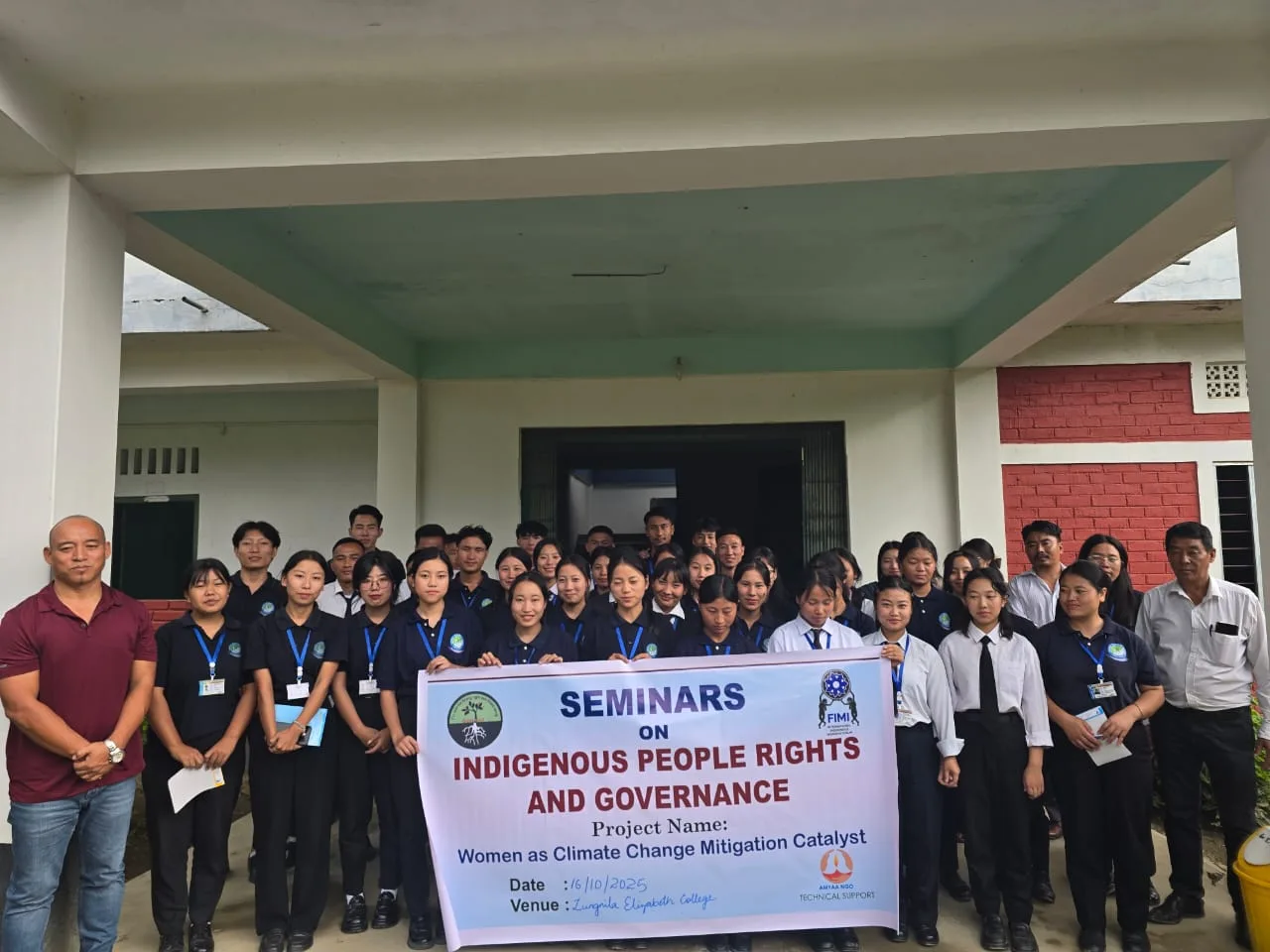
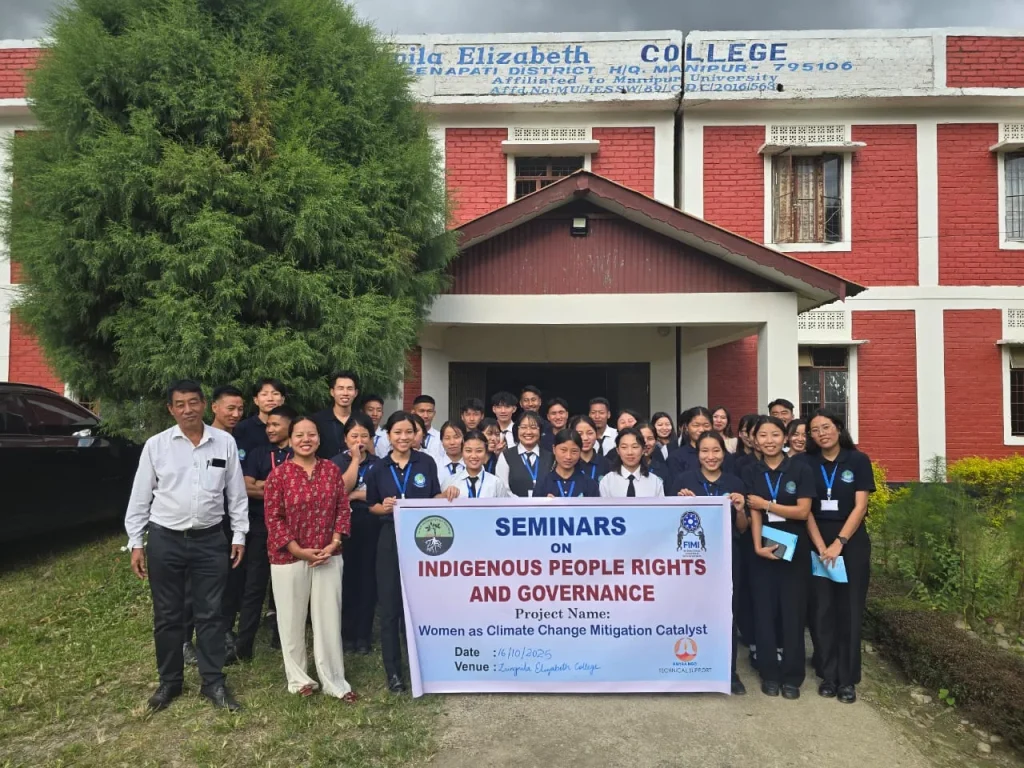
Senapati, October 20: A workshop on Indigenous People’s Rights and Governance was successfully organised on 16 October 2025 by the Department of Social Work, Lungnilla Elizabeth College, Senapati District, Manipur. The programme witnessed the participation of 31 students and faculty members, aiming to raise awareness about constitutional provisions, governance mechanisms, and indigenous rights relevant to the hill communities of Manipur.
The first session was led by Mr R. K. Paul Chawang, a noted social activist, who spoke in depth on the constitutional framework under Article 371C and the Autonomous District Councils (ADCs) established for the hill areas of Manipur. He explained the roles of the Hill Areas Committee (HAC), the election of legislators from the hills, the functions of the United Naga Council, and the responsibilities of village authorities in administering local governance and implementing grassroots developmental programmes.
Paul Chawang critically reflected that, despite several decades of existence under the provisions of Article 371C and the ADCs, the Naga indigenous communities in Manipur have not witnessed substantial progress across various sectors. He emphasised the urgent need for a united demand for a stronger and more empowered Autonomous District Council system, where greater powers of self-governance and self-determination are constitutionally recognised and practically implemented.
He further observed that under the current system, there is limited intervention or visible role of the State Governor or the President of India in addressing the developmental disparities faced by the hill districts. He called for a serious and equitable approach to welfare distribution, highlighting the need for focused investments in establishing medical institutions, nursing colleges, universities, entrepreneurship institutes, and mini-airports, alongside proper road connectivity from district headquarters to interior villages.
Chawang also underscored the importance of reviving defunct government schools to ensure free and quality education for children from poor socio-economic backgrounds. He called for women’s empowerment through livelihood and skill-based programmes, as well as youth-led community initiatives and farmer upliftment through modern technologies and agricultural machinery.
He urged all government departments located at the Senapati District Headquarters to conduct village outreach programmes to raise awareness about existing government schemes and ensure inclusivity in their implementation. He further stressed that the Deputy Commissioner, as the head of all district departments, must monitor and review all developmental projects more stringently, ensuring transparency, accountability, and equitable growth each financial year for all sections of society.
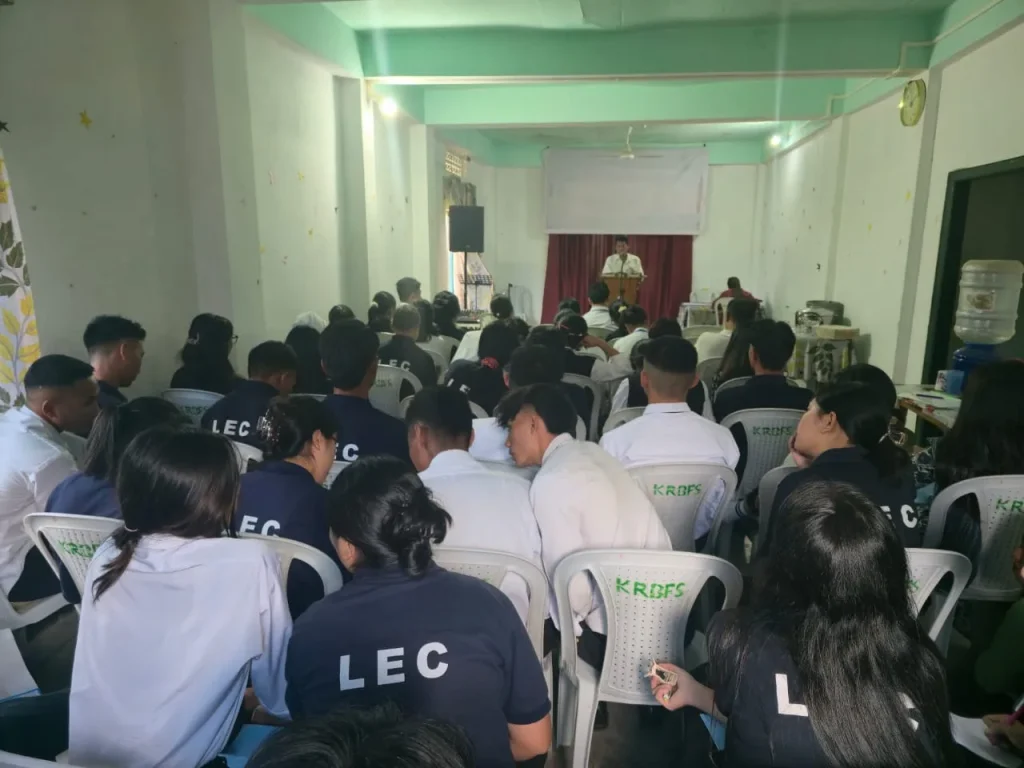
The second session was conducted by Advocate Heni Ahrai, who spoke on Indigenous Rights in Global and National Contexts, drawing references from the United Nations Declaration on the Rights of Indigenous Peoples (UNDRIP). He elaborated on the importance of participatory governance, equity, and sustainable development, and discussed how indigenous people can utilise both international frameworks and constitutional provisions to assert their rights and strengthen their governance systems.
The workshop concluded with an interactive discussion session, allowing participants to share their reflections and engage with the speakers on various aspects of governance and indigenous empowerment. The event was widely appreciated for providing a meaningful platform for dialogue, awareness, and capacity-building among the youth and academic community of Senapati District.
